


A surprising sleep-safety misconception is that a softer crib mattress feels more comfortable for a baby, so it must be better. In reality, federal safety updates and guidance from the AAP point in the opposite direction: for infant sleep surfaces, a firmer, properly fitted mattress is a key part of reducing hazardous sleep environments.
Key Takeaways: CPSC crib mattress rules focus on two things parents often underestimate: firmness and fit. A compliant mattress should be firm enough to maintain a flat sleep surface and sized to minimize dangerous gaps between the mattress and crib sides. Always confirm compatibility with your specific crib model, check the manufacturer’s dimensions, and stop using any mattress that sags, compresses deeply, or leaves noticeable side gaps.
That matters because crib mattress safety is not mainly about luxury materials or marketing terms. It is about whether the mattress supports safer sleep practices, fits the crib correctly, and meets the performance expectations set by the U.S. Consumer Product Safety Commission (CPSC).
This article breaks down what CPSC safety standards actually mean for crib mattress firmness and fit requirements, how those standards connect with AAP safe-sleep guidance, and what numbers parents should check before buying. This is informational content, not medical or parenting advice. Always follow manufacturer guidelines and consult your pediatrician.
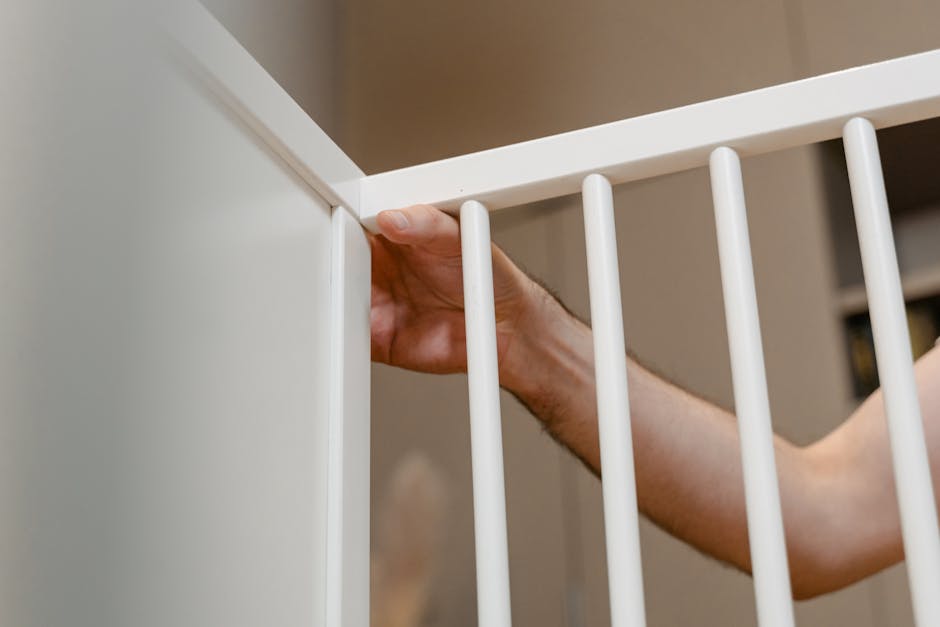
Why crib mattress firmness matters more than many parents expect
When parents shop for nursery gear, softness is often marketed as a premium feature. That logic may make sense for adult mattresses, but it does not translate well to infant sleep products.
The AAP’s safe-sleep recommendations emphasize a firm, flat, non-inclined sleep surface for babies. A mattress that allows deep indentation, visible sagging, or body-conforming sink can create a less stable sleep environment. CPSC rulemaking around infant sleep products has increasingly aligned with this broader safety principle: infant sleep surfaces should resist dangerous deformation and maintain a flat profile under use.
In plain English, firmness means the mattress should not cradle a baby the way a plush adult bed does. It should support the baby on top of the surface rather than around the body.
- Firmness helps preserve a flat sleep position.
- Reduced sink can lower the chance of the face becoming pressed into bedding-like material.
- A more stable surface also helps the fitted sheet stay more predictable and taut.
That does not mean the hardest mattress on the market is automatically the safest. It means the mattress should meet applicable federal requirements and remain structurally firm during normal use, without soft zones, sagging corners, or foam collapse.

What the CPSC requires for crib mattress fit
Fit is the other half of the equation, and it is just as important. Even a firm mattress can become problematic if it does not fit the crib interior properly.
CPSC crib standards are designed to reduce hazardous gaps between the mattress and crib sides. If a mattress is too small for the crib, space can open along the perimeter. That gap can create an entrapment risk, especially as infants begin moving more during sleep.
For a standard full-size crib, the commonly cited mattress dimensions are approximately 51 5/8 inches long by 27 1/4 inches wide, with tolerance limits built into the federal framework. The broad practical takeaway is simple: parents should not assume all crib mattresses are interchangeable just because the packaging says “standard.”
Manufacturing tolerances, crib design differences, waterproof edge seams, and mattress cover thickness can all affect real-world fit. That is why the CPSC and crib manufacturers typically expect a mattress to be used only with compatible products and according to labeled instructions.
| Fit Requirement Area | What It Means in Practice | Why It Matters |
|---|---|---|
| Length and width | Mattress should closely match the crib’s interior dimensions | Reduces side and end gaps that may increase entrapment risk |
| Corner fit | Corners should sit snugly without curling or lifting | Helps keep the sleep surface flat and stable |
| Thickness consistency | Surface should remain level across the mattress | Limits uneven support and sagging zones |
| Sheet compatibility | Fitted sheet should stay taut without bunching | Loose fabric can interfere with a safer sleep setup |
A good parent check is visual and physical: once the mattress is installed, it should sit evenly, with no obvious large perimeter gaps, no rocking, and no compressed corners caused by mismatched sizing.

How firmness and fit work together for safer sleep
Parents often treat firmness and fit as separate buying criteria, but in real use they are linked. A mattress can technically fit a crib by dimensions and still perform poorly if its edges compress too easily, its center sags, or its surface loses shape over time.
Likewise, a mattress can feel firm in the showroom but become less safe if it leaves room along the crib wall. That is why CPSC-focused crib safety should be understood as a system: the mattress must be firm enough to stay flat and precise enough in size to limit gaps.
JPMA certification can also be a useful shopping signal, since it indicates a product has been tested to relevant standards, but certification should complement—not replace—your own dimension and fit checks.
- Firmness without fit can still leave entrapment spaces.
- Fit without firmness can still allow dangerous indentation or sag.
- Both together support the safer sleep setup recommended by pediatric safety guidance.

What numbers parents should actually compare before buying
Marketing language like “premium support,” “breathable comfort,” or “dual-sided luxury” does not tell you whether a crib mattress is a strong safety match. The better approach is to compare measurable specifications first.
| Specification | Typical Range | What to Check |
|---|---|---|
| Standard crib mattress size | About 51.625 in x 27.25 in | Match against your crib manufacturer’s approved dimensions |
| Thickness/height | Usually 4 in to 6 in | Ensure fitted sheets still stay taut and flat |
| Weight capacity/use stage | Infant use through toddler years, often up to 50 lb | Verify stated limits and whether firmness changes by side |
| Age range | Birth to toddler transition | Follow labeled age and stage recommendations only |
| Price | Often $60 to $250+ | Higher price does not automatically equal safer fit or firmness |
Some mattresses advertise dual-sided construction, with a firmer infant side and a slightly cushioned toddler side. That can be practical, but only if the product clearly labels each side and still meets applicable safety requirements for crib use.
Dimensions matter especially when shopping online. A mattress listed at 52 x 28 inches may sound standard, but the actual finished size, piping, seam shape, and crib interior tolerance still matter. Always compare the manufacturer’s exact numbers for both the crib and mattress before ordering.

Common shopping mistakes that can undermine compliance
The most common problem is not that parents ignore safety altogether. It is that they assume common retail shortcuts are harmless.
1. Buying by material buzzwords instead of measured performance
Terms like organic, breathable, natural, and hypoallergenic may matter for other buying preferences, but they do not replace fit and firmness checks. Safety starts with compliance and compatibility, not branding language.
2. Reusing an older mattress that has softened
Foam and innerspring mattresses can degrade over time. If a mattress has body impressions, edge collapse, torn covers, or water damage, its original safety profile may no longer hold.
3. Assuming all “standard” cribs and mattresses fit identically
Small dimensional variations can change how snugly the mattress sits. A mattress that fit one crib well may not fit another one the same way.
4. Adding aftermarket toppers or padding
The CPSC and AAP safety logic is built around a firm, flat sleep surface. Extra padding, memory-foam style layers, and add-on softeners can interfere with that design.
5. Ignoring the sheet fit test
A mattress can seem acceptable until a fitted sheet is added. If the sheet bunches, loosens, or pulls the corners upward, the setup deserves a second look.
How to evaluate a crib mattress at home
You do not need a lab to do a basic safety-minded check. You do need to be more systematic than most product listings encourage.
- Measure the crib interior using the manufacturer’s stated dimensions if available.
- Compare the mattress dimensions from the product label, manual, or manufacturer site.
- Install the mattress fully and inspect all four sides and corners.
- Press on the center and edges to look for deep compression, instability, or weak perimeter support.
- Add the fitted sheet and confirm it remains snug, flat, and non-bunched.
- Recheck over time, especially after accidents, cleaning, storage, or prolonged use.
If the mattress visibly sags, shifts in the crib, or leaves suspiciously wide spaces at the sides, that is a reason to stop and reassess compatibility. When in doubt, contact the crib or mattress manufacturer directly and use only products approved for that model.
What major safety organizations say
The CPSC sets and enforces federal consumer product safety rules for cribs and related infant sleep products in the United States. Those rules work alongside guidance from pediatric and testing organizations that help parents interpret what safer setup looks like in practice.
- CPSC: establishes mandatory safety requirements intended to reduce hazards such as entrapment, structural failure, and unsafe sleep product performance.
- AAP: recommends babies sleep on a firm, flat, non-inclined surface with no soft bedding or added padding.
- JPMA: certification can indicate a product has been independently tested against applicable standards.
- Consumer Reports: often highlights that fit, support, and simple safe-sleep setups matter more than marketing extras.
- NHTSA: while focused on vehicle safety rather than crib sleep, its broader child-safety messaging reinforces the importance of using products exactly as intended and not improvising with add-ons.
Parents should read these sources together rather than treating any one label as the whole answer. A crib mattress is safer not because it sounds premium, but because it meets standards, fits correctly, and is used exactly as directed.
Here’s where most people get it wrong.
So what do CPSC crib mattress standards really mean for buyers?
For most parents, the practical meaning is straightforward: buy a mattress that is labeled for crib use, verify it is compatible with your specific crib, prioritize a firm flat surface over softness claims, and reject any product that leaves visible gaps or develops sagging.
The safest buying mindset is less “Which mattress is the fanciest?” and more “Which mattress meets the right requirements consistently over time?” That shift alone filters out a lot of marketing noise.
If you are comparing several options, focus first on dimensions, edge support, age range, thickness, certification, sheet fit, and clear manufacturer guidance. Price can matter, but safety compliance and proper fit matter more.
This is informational content, not medical or parenting advice. Always follow manufacturer guidelines and consult your pediatrician.
FAQ
How firm should a crib mattress feel?
A crib mattress should feel notably firmer than an adult mattress. It should maintain a flat surface and resist deep indentation, in line with AAP safe-sleep guidance and CPSC safety goals for infant sleep environments.
Can I use a slightly smaller mattress if it is labeled standard size?
No shortcut is worth the risk. Even small size differences can create perimeter gaps, so parents should compare the exact dimensions of both the crib and mattress and follow manufacturer compatibility guidance.
Do breathable or organic labels mean a crib mattress is safer?
Not by themselves. Materials and marketing claims do not replace the basics: compliant sizing, firm support, proper fit, and correct use with a taut fitted sheet and no added padding.
When should a crib mattress be replaced?
Replace it if you see sagging, tears, water damage, edge collapse, warped corners, or any loss of firmness. A mattress that no longer stays flat and snug may no longer perform as intended.
Sources referenced: American Academy of Pediatrics (AAP) safe sleep guidance; U.S. Consumer Product Safety Commission (CPSC) crib and infant sleep product safety regulations; Juvenile Products Manufacturers Association (JPMA) certification guidance; Consumer Reports crib mattress and nursery safety reporting; National Highway Traffic Safety Administration (NHTSA) child safety education resources.
📌 You May Also Like